REEAN / PORTFOLIO
All built apps

Built app / PROJECT FILE

DISC ONE.

An independent game library and backlog app, growing from a web prototype into iPhone and Android development builds.

Role
Independent creator
Status
In development

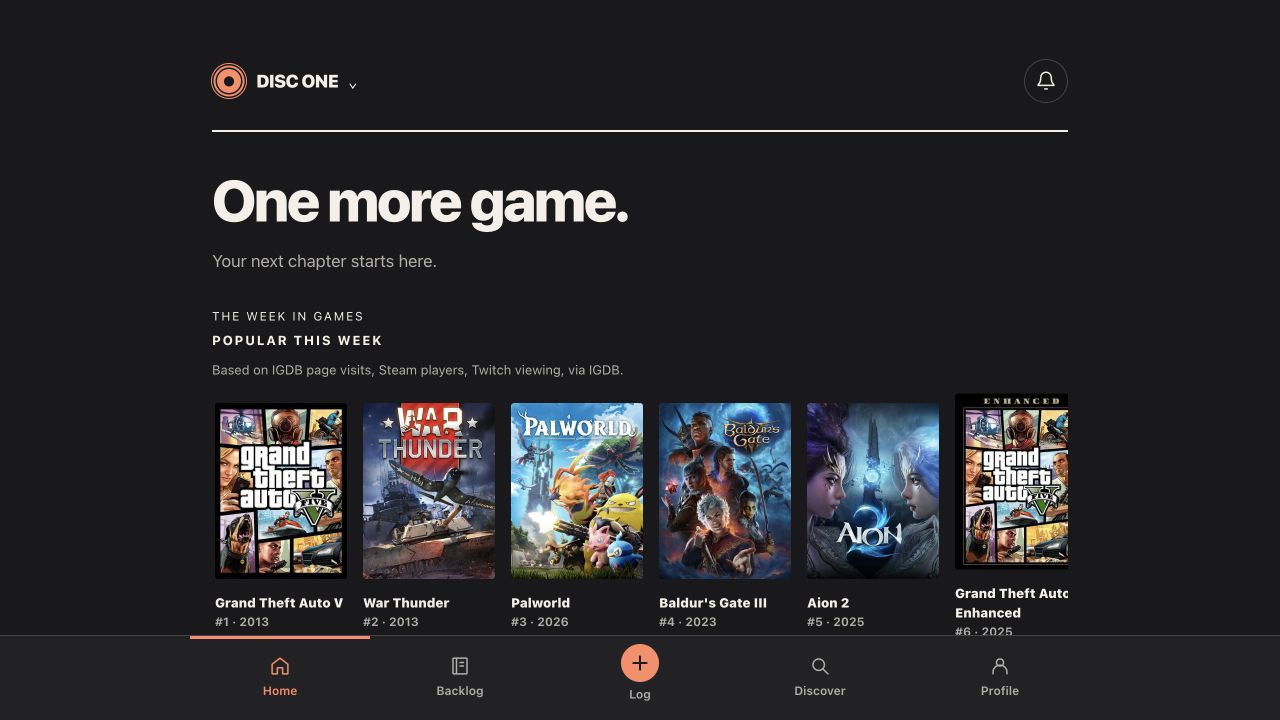
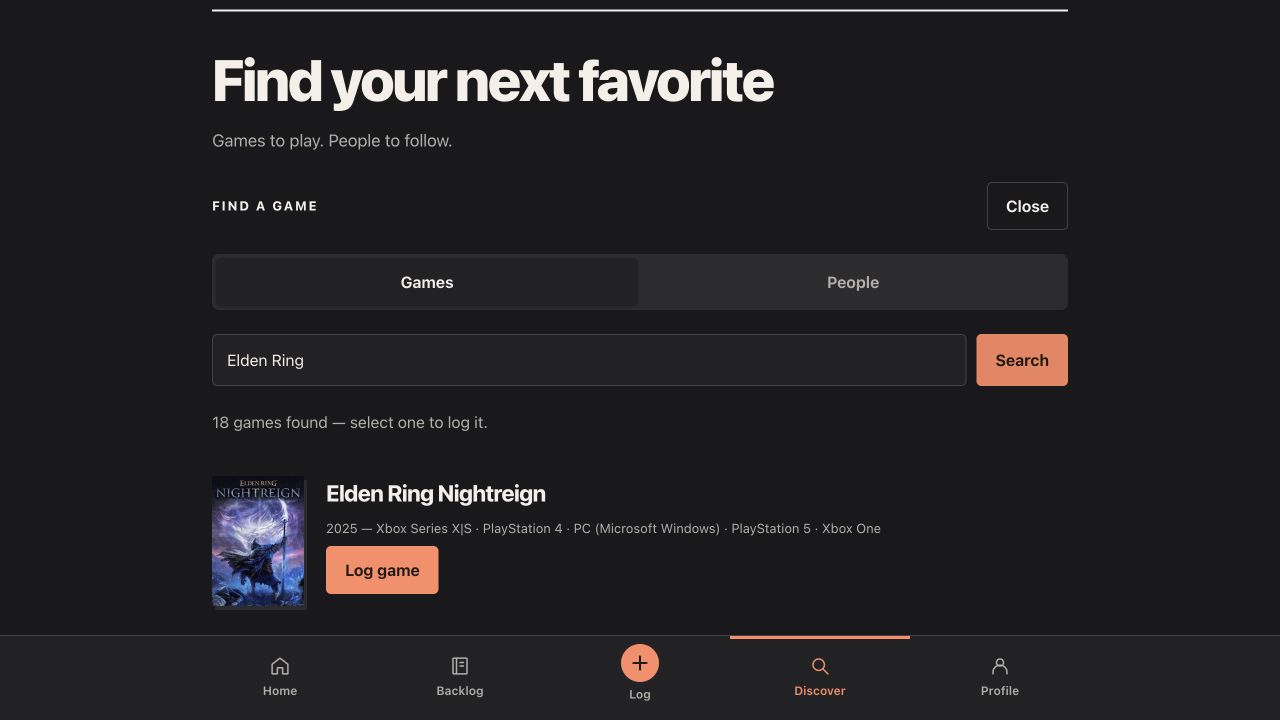
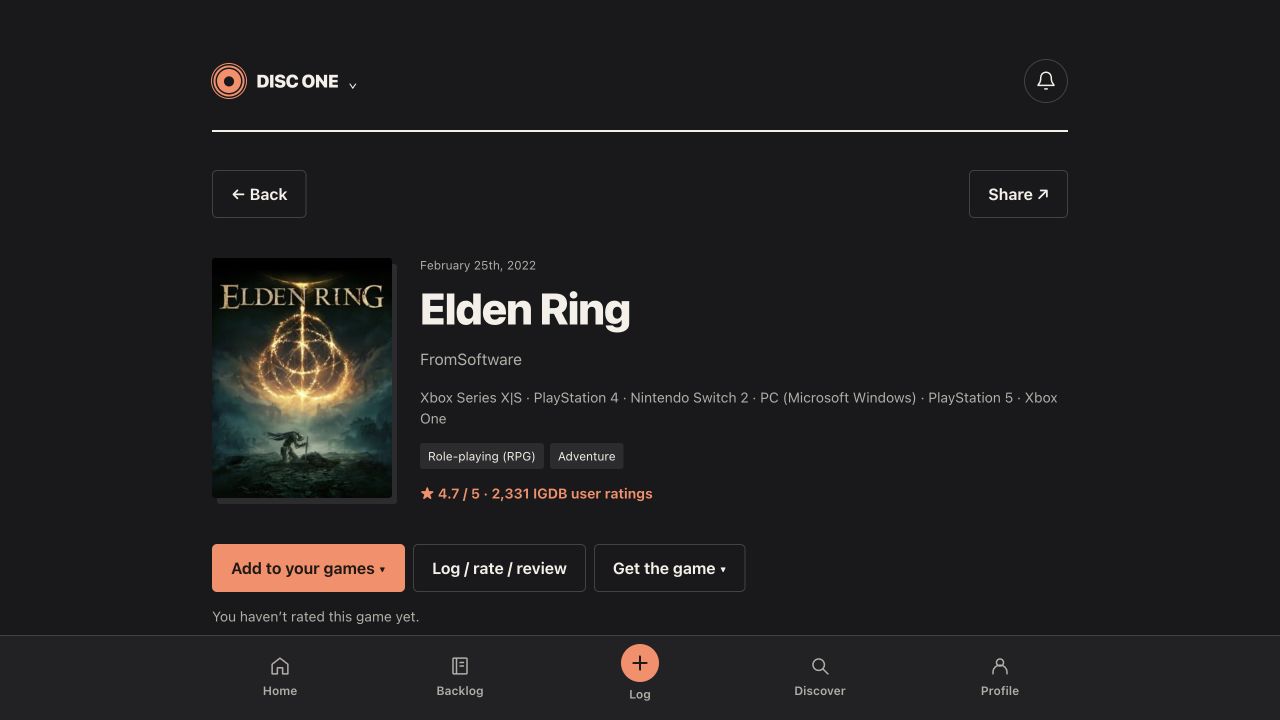
App screens

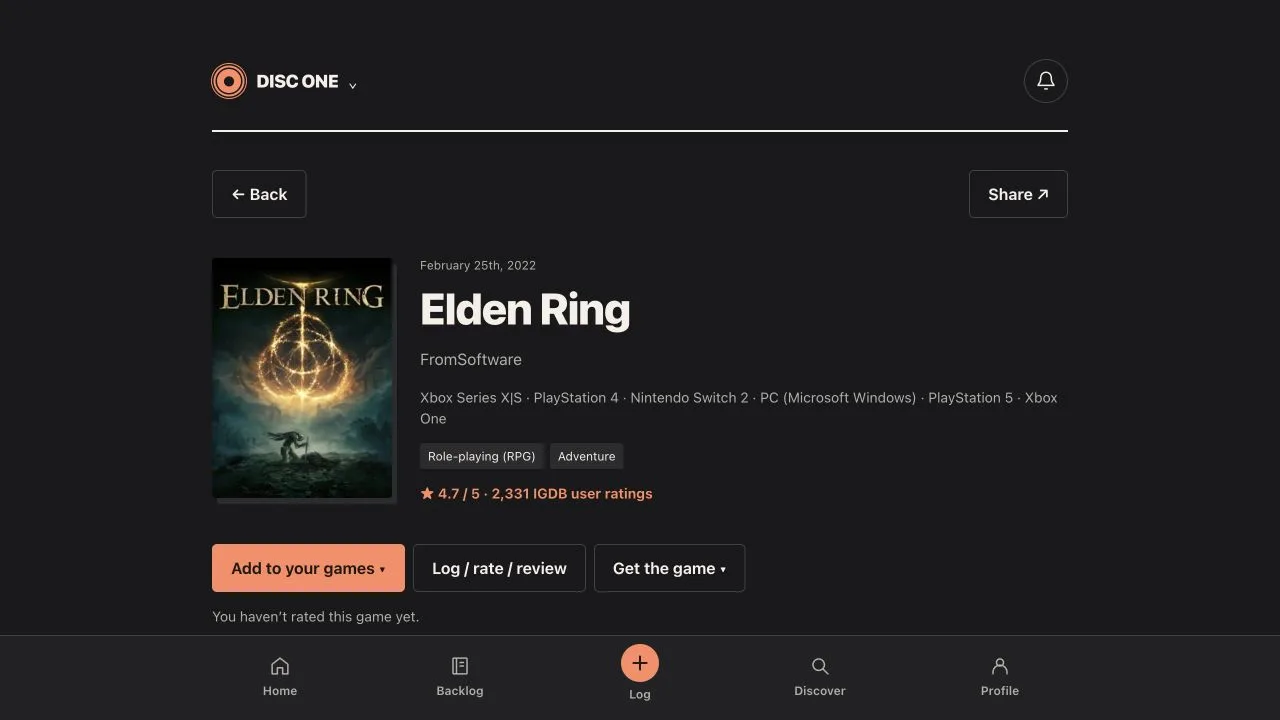
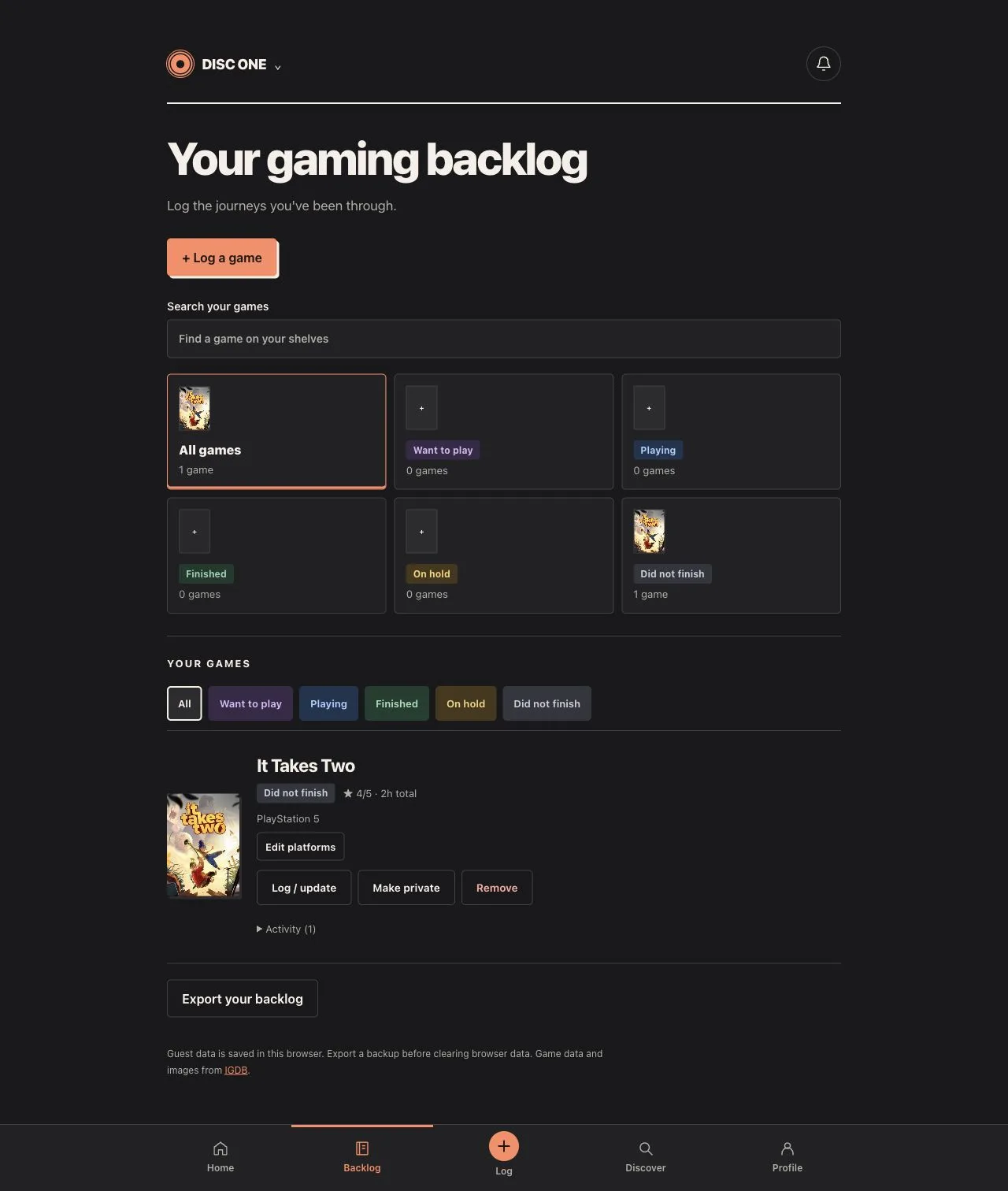
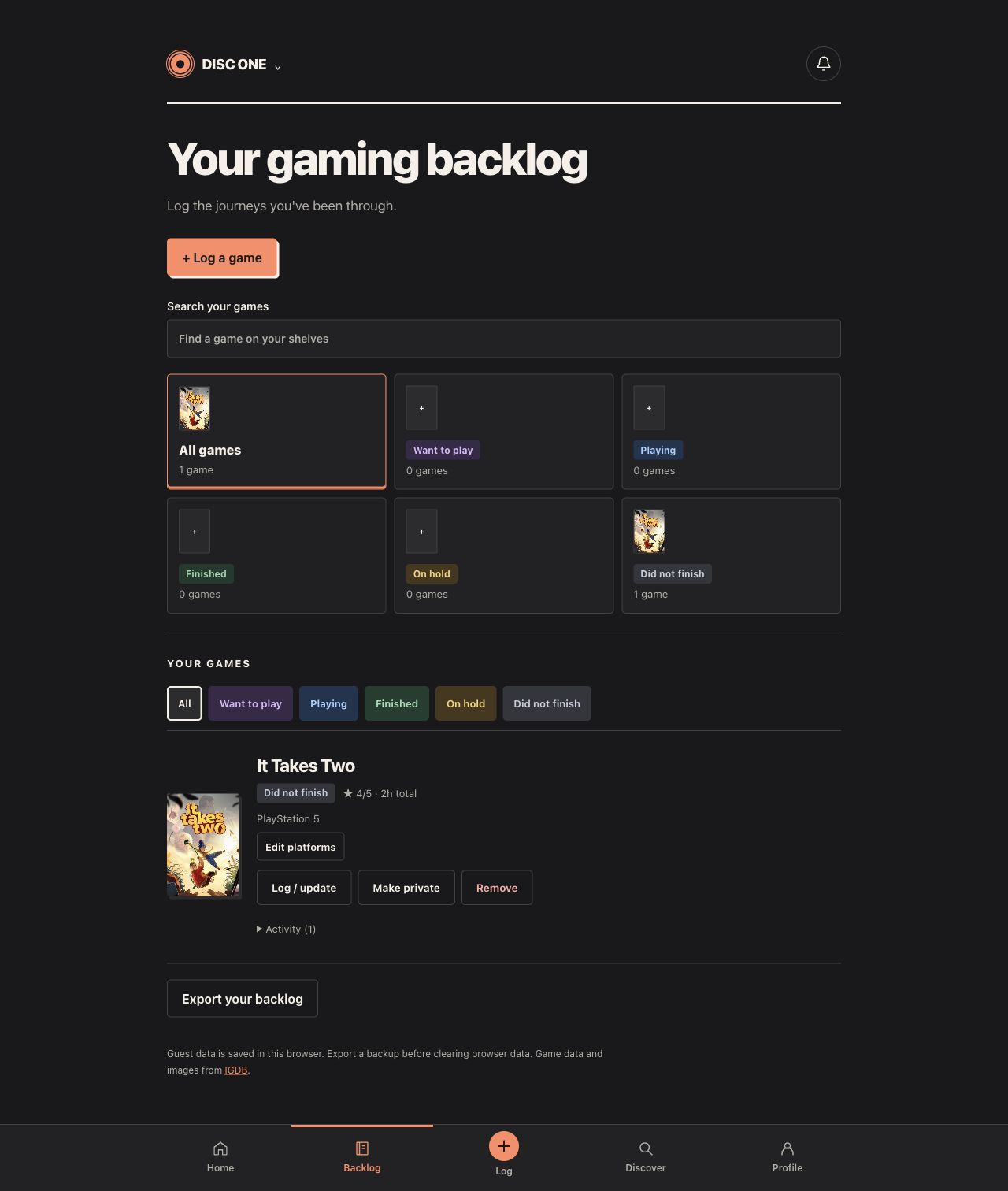
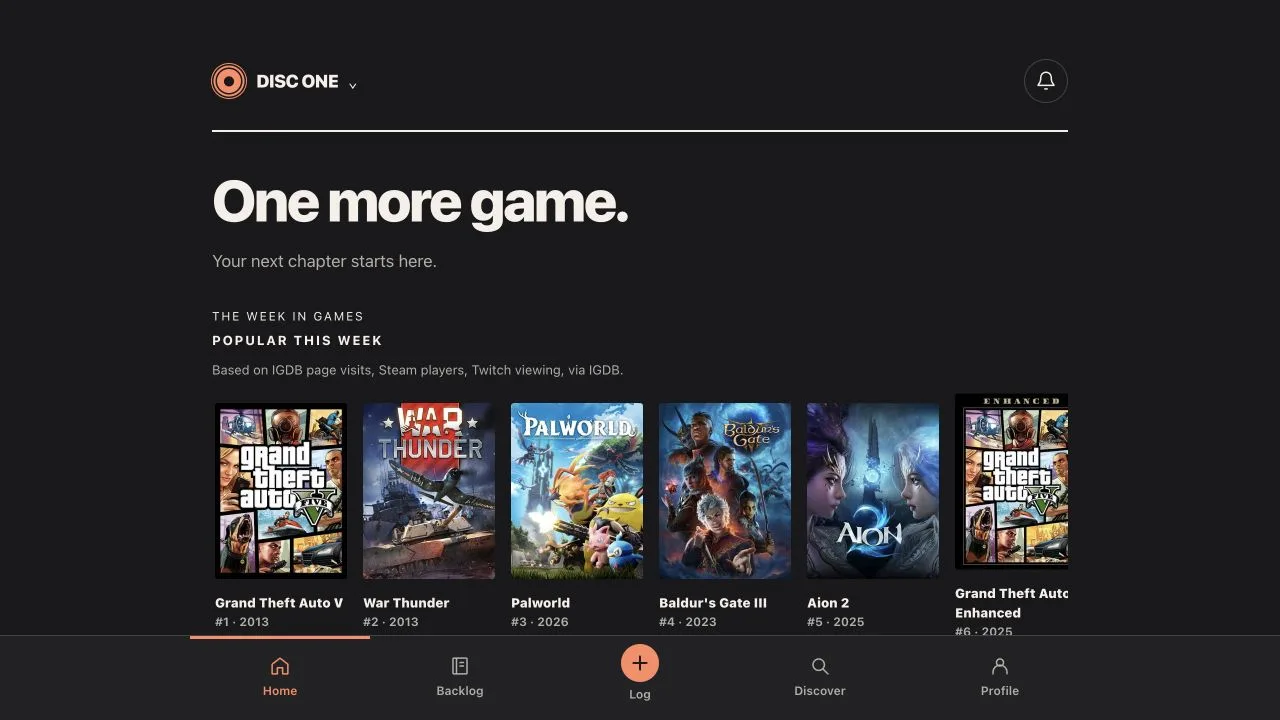
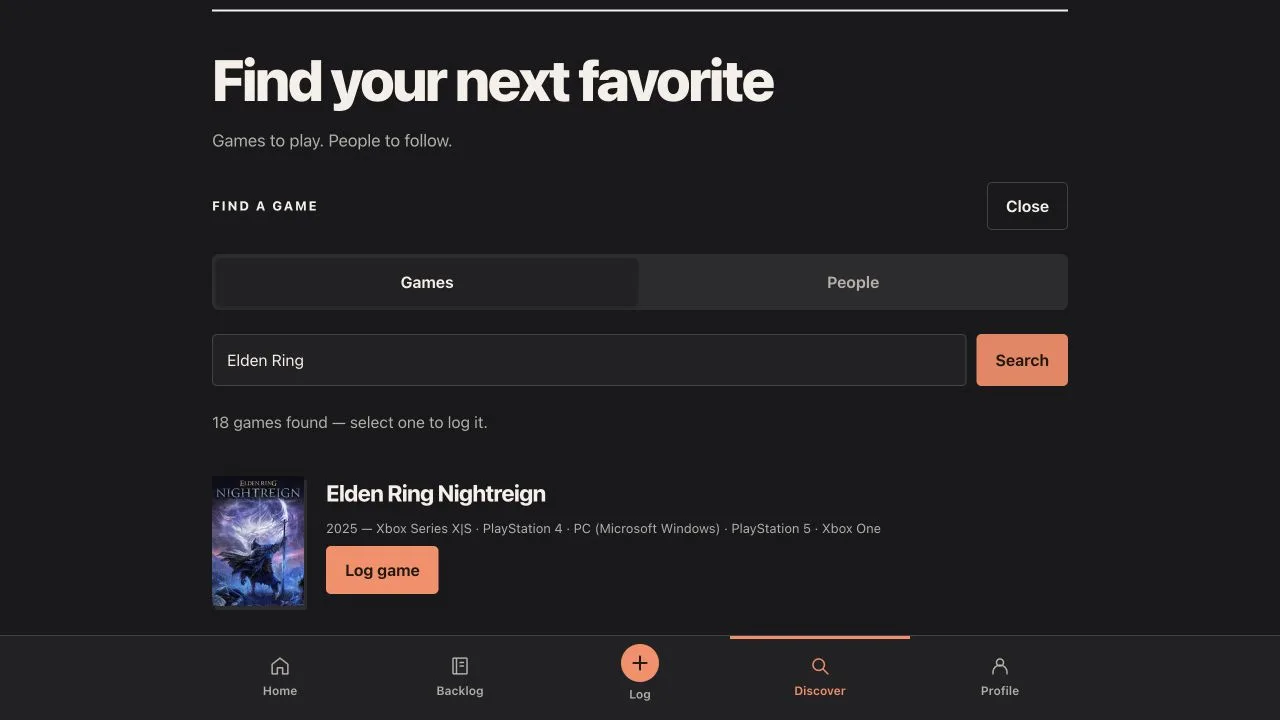
Web prototype captures · November 6, 2026 · Home, discovery, game details, and backlog. Game data and cover art supplied in the app by IGDB.

On a smaller screen

The same library, made for your pocket.

MOBILE WEB PREVIEWS
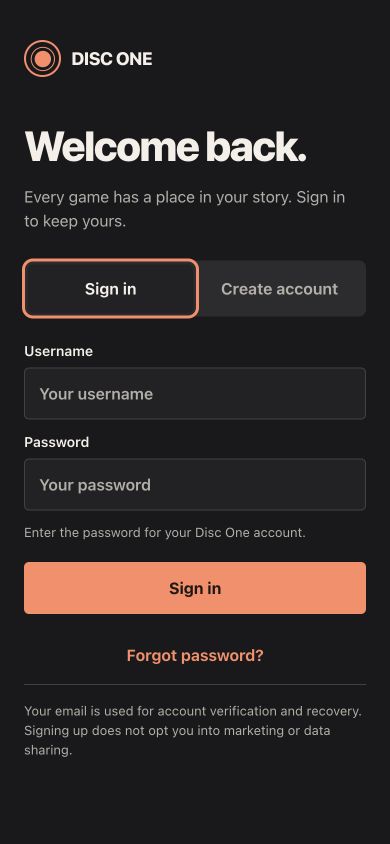
Disc One mobile sign-in screen with its logo, welcome message, username and password fields, and peach sign-in button.
01 /

A place for your games

The sign-in experience.

Full size
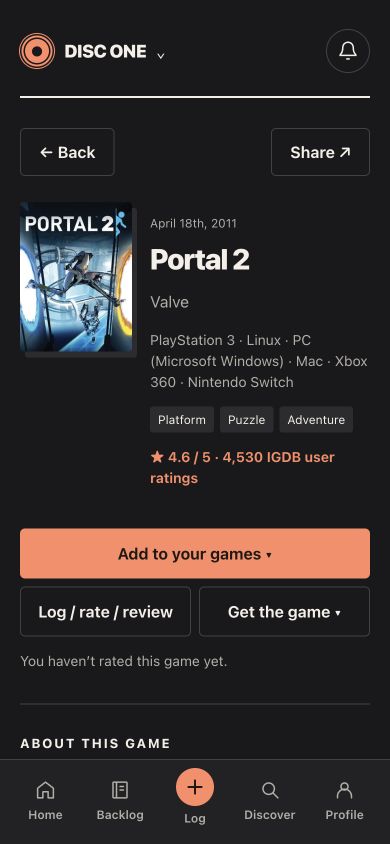
Disc One mobile game details for Portal 2, with cover art, platforms, rating, and controls to add or log the game.
02 /

Every game, in detail

Game information and library actions.

Full size
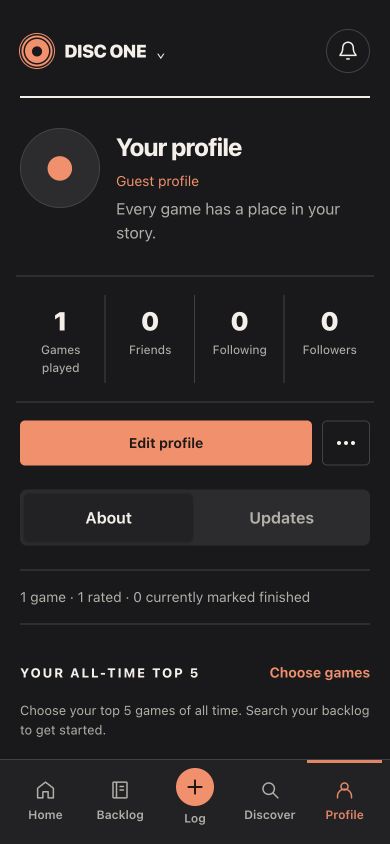
Disc One mobile guest profile with game and friend counts, profile controls, and an empty all-time top-five section.
03 /

Your player profile

Profile layout in the guest test build.

Full size

Swipe or scroll to explore

Mobile web previews at 390 × 844 · November 2026. These show the shared mobile interface, rather than captures from a physical iPhone. Game data and artwork supplied by IGDB.

The app

A home for the games you want to play, the ones you’re playing, and the ones that stay with you.

Disc One brings discovery, a personal backlog, reviews, and playtime logging together. Search the catalog, organize games into shelves, connect with friends, and look back on your play through monthly and yearly recaps.

My role

I lead the product direction and delivery of this independent project. Working through an AI-assisted build, I define what to make, prioritize changes, test the experience, and decide what is ready for the next stage.

Project management in practice

Define the product and its priorities

I shaped the core loop around finding a game, adding it to a shelf, and recording the experience. I set priorities across discovery, logging, profiles, and social features, then refined them through hands-on use.

Turn feedback into acceptance criteria

I tested with my own library and called out specific friction: hundreds of unmatched imports, lost scroll position, incomplete search results, and crowded profile controls. Each became a concrete requirement for the next iteration.

Manage integrations and scope

I prioritized Steam imports, asked for bulk selection and better matching, and required existing ratings, reviews, and shelf choices to survive an import. When other providers became a dependency, I deferred them and kept manual entry available.

Sequence delivery across platforms

I moved the project from a browser prototype toward phone testing while keeping Android in scope alongside iPhone. I reviewed development builds and fed device-specific issues back into the work before a public release.
Development timeline

Selected milestones · October–November 2026

  1. Library, profiles, and the first imports

    Expanded people search and friend requests, then prioritized Steam imports. Bulk actions, multiple platforms per game, and preservation of existing library data became explicit requirements.

  2. Test with a real, growing library

    Worked through account controls, catalog matching, and import bottlenecks. Large-library testing drove a faster matching queue, clearer progress, and fixes that kept users on their current shelf after logging a game.

  3. Make the scope decisions

    Added monthly and yearly recaps and manually recorded platinum achievements. Paused PSN, Epic, and GOG connections, with manual gamertags available while those integrations remain unavailable.

  4. Take the prototype onto phones

    Reached an Android emulator build and an installed iPhone development build. Phone testing informed the next pass on search, date consistency, profile organization, and accidental zoom.

The next milestone is a hosted service that works without the development Mac, followed by wider device testing and release preparation.

Decisions behind the build

01 /

Keep imported hours distinct

Lifetime hours from an imported library are different from dated play sessions. Recaps use dated sessions so older playtime is not presented as activity from the current month.

02 /

Protect the library people have built

Imports should add useful information without overwriting reviews, duplicating a game for every platform, or moving it to the wrong shelf.

03 /

Defer dependencies without blocking the app

Unavailable platform connections have a clear status and a manual fallback. The core library remains usable while provider access and hosting are worked out.

NEXT PROJECTMANGA COLORIZER